If you mainlined the Paris Olympics, as I did, you would have seen the controversy around two women boxers, Imane Khalif from Algeria and Lin Yu-ting from Taiwan. Both had been banned from competing in the 2023 Women’s World Boxing Championships by the International Boxing Association (IBA) but were cleared to compete in the 2024 Olympics by the International Olympic Committee (IOC).
The IOC’s line was that Khalif and Lin were born and raised as women, registered as women on their passports, and therefore eligible to compete in the women’s competition. The IBA, on the other hand, maintained that blood testing indicated Khalif and Lin both had ‘XY’ chromosomes, although they didn’t publish any medical evidence to back-up those claims. The history between the two governing bodies didn’t help matters: in 2019 the IOC had suspended the (Russian-led) IBA for integrity issues. Khalif and Lin both went on to win gold medals in their respective categories.
The problem is that elite sport mostly relies on binary male / female categories, whereas (for some) biology is more complicated. It’s estimated that one in 5,000 children are born with ambiguous genitalia. In the past, they would have been called hermaphrodites. Now their ‘condition’ is more likely referred to as DSD (Differences in Sex Development) or intersex. (The most famous intersex athlete, South African middle-distance runner Caster Semenya, apparently rejects the intersex’ label, calling herself ‘a different kind of woman’.)
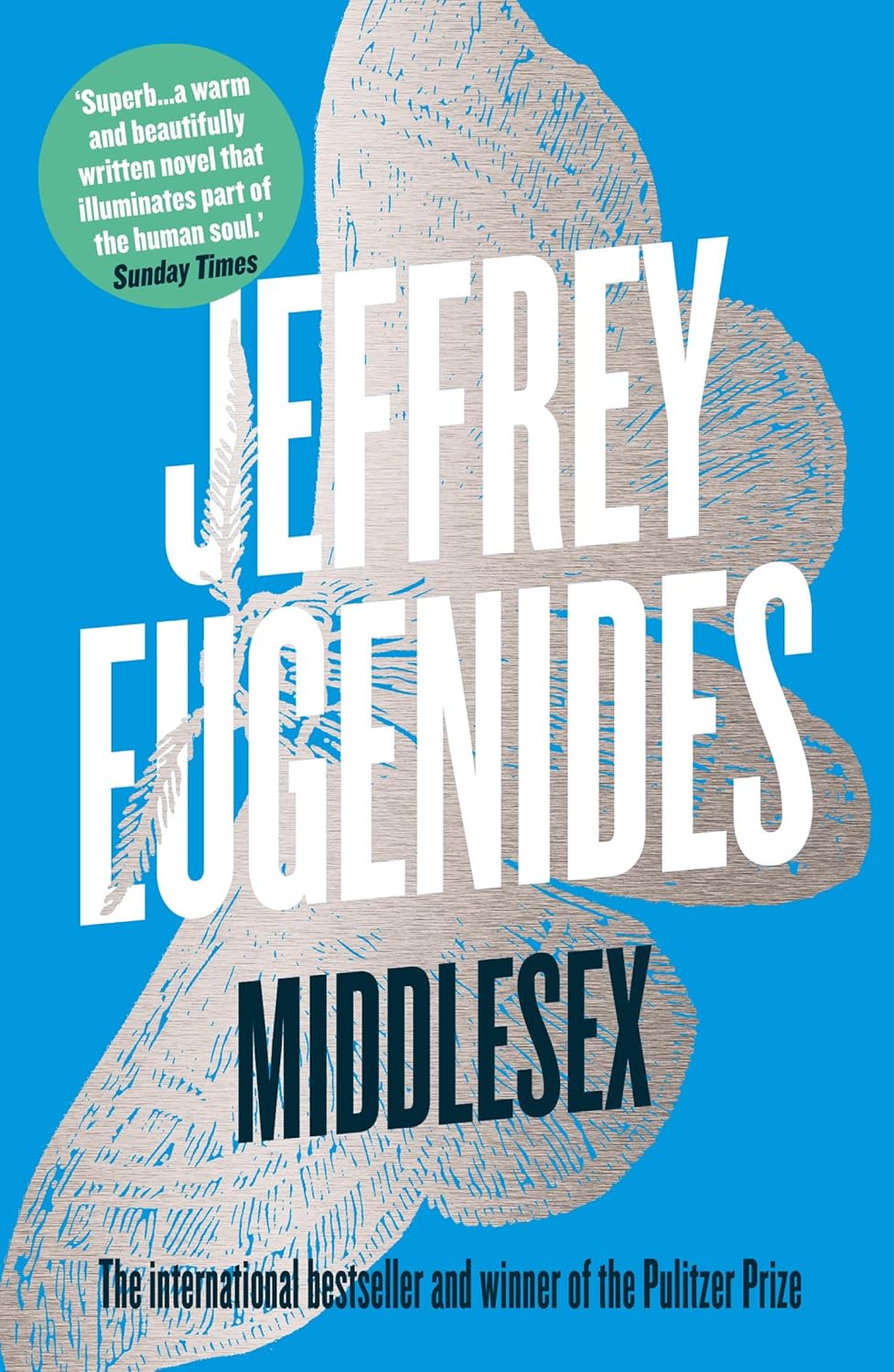
Middlesex by Jeffrey Eugenides is the story of Calliope / Cal Stephanides: “I was born twice: first, as a baby girl…and then again, as a teenage boy…” So begins the story of three generations of the Stephanides family, starting with Cal’s Greek grandparents, who came to America in the 1920s from Asia Minor (in present day Turkey). Cal inherits “the recessive mutation on my fifth chromosome” courtesy of “departed great-aunts and –uncles, long-lost grandfathers, unknown fifth cousins, or, in case of an inbred family like mine, all, those things in one.” It probably didn’t help that her / his grandparents are brother and sister. (That’s not-a-spoiler by the way; we learn it early on in the story).
This is such an interesting book. A vast, family saga and also a coming-of-age story; political (by page 21 we’re learning about the Greek invasion of western Turkey in 1919) yet deeply, deeply personal; a love-letter to Mount Olympus and Detroit. It also has one of the strangest character names I’ve ever come across in a book: Cal’s brother is called Chapter Eleven (why is never explained). It’s sad, funny, moving…and different to anything I’ve read before. Middlesex won the Pulitzer Prize in 2003.
Rating: *** Highly recommended
PS I chose this book from What Writers Read (35 writers on their favourite book) edited by Pandora Sykes, which was a Christmas present from my sister. Thanks, Tina!
PPS Another book by Jeffrey Eugenides – The Virgin Suicides – is now on my reading list.
 whatcathyread