A friend’s daughter wants a Prosecco bottomless brunch to celebrate her eighteenth birthday later this year. (For anyone who doesn’t know this is fixed-price brunch with unlimited drinks for a set time, typically ninety minutes or so). The standard for eighteenth celebrations was much lower in my day. On my eighteenth, I went for a swim – it would be more accurate to say a doggy paddle, because I couldn’t swim back then – then had two friends round to my house for a birthday “tea” comprising sandwiches, tea, and cake. Hubby’s eighteenth birthday followed much the same pattern as mine: golf with his step-mother, then home for a birthday “tea” with his siblings, mum, granny and great-aunt.
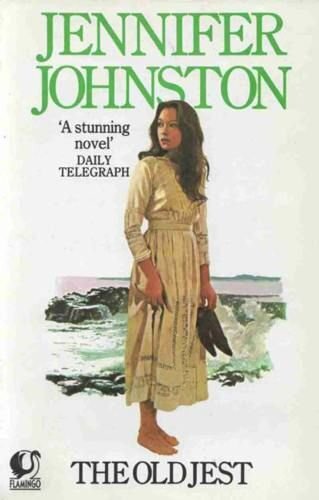
Nancy, heroine of The Old Jest, celebrates her eighteenth with a birthday luncheon (it sounds grander than “tea” though it’s still sandwiches and cake) with Aunt Mary, Grandfather, Bridie the cook – but at least Harry turns up (who she fancies, although the feeling is not reciprocated) and there’s champagne!
The date is 5 August 1920 and the setting is a small village on the east coast of Ireland. For Nancy it is a ‘momentous’ day, one that marks ‘a very important landmark’ when she wants ‘to start to become a person’ i.e. instead of a child.
Curiosity led me to Google the date. It was the day the House of Lords sat to debate the escalating crisis in Ireland, the revolutionary movement, and the government’s failure (as some saw it) to grip the increasingly violent guerrilla campaign. It’s hard to believe Johnston chose the date by chance, not when Nancy writes in her journal, in between accounts of leaving school and her birthday presents and cards, about how ‘Barney Carney was shot last week coming out of a dance hall in Bray, by the Black and Tans.’^ Nancy and Ireland: both in transition, both wanting to throw off the old rules imposed on them and become new, different.
The action of the novel unfolds over nine days. In the second chapter, three days after her birthday, Nancy realises someone has been in her beach hut. The next day she meets the intruder, an older man who says he’s ‘the traveller’, and who Nancy names Cassius because he has ‘a lean and hungry look’.
Yep, Nancy is quoting from Shakespeare’s Julius Caesar, specifically Caesar’s description of Cassius, which foreshadows Cassius’s role in plotting Caesar’s assassination. It’s a clever conceit by Johnston: we begin to understand which side in the Irish conflict ‘the traveller’ is on almost without being told.
As it happens, the novel’s title An Old Jest, is also a quotation. Nancy’s Grandfather tells her, ‘Someone once said “Death is an old jest, but it comes to everyone.” […] Was it Kipling?’ And she corrects him: ‘Turgenev.’ She’s well read, our Nancy –though she doesn’t correct Grandfather’s misquotation. Turgenev actually wrote ‘death is an old jest, but it comes new to everyone.’ Again, I can’t imagine this unintentional on Johnston’s part. The original Turgenev version contrasts the banal universality of death (everyone dies) with the shock of individual experience (I will die); whereas in Johnston’s stripped-back version, we’re left with the idea of death as some kind of grim and inevitable joke – another foreshadowing of later events.
And so it continues. When Nancy agrees to ‘do a message’ for Cassius we realise she’s getting herself involved in an adult world she doesn’t fully understand, the possible consequences of which she hasn’t properly considered.
You might have gathered by now that Johnston’s writing is both clever and subtle. She doesn’t tell you what to think, she doesn’t drip-feed you; she expects you, the reader, to bring something to the party. But it’s a short read (150 pages) so you don’t have to work for long, and the pay off at the end is more than worth it.
The Old Jest won the Whitbread Award for the best novel of 1979.
Rating: *** Highly recommended
^ The Black and Tans were temporary constables recruited from Great Britain to reinforce the Royal Irish Constabulary (RIC) during the Irish War of Independence (1920–1921). Composed mainly of ex-soldiers, they were infamous for brutal reprisals against civilians, including arson and murder, earning a reputation for lawlessness and intensifying the conflict.

