I’ve had lots of bad photographs taken of me over the years. The ones that really upset me are when I’m snapped when I don’t know I’m being taken. Like when I’ve loved every moment of singing at a choir gig but then been sent a close-up shot that shows me open-mouthed, looking like a jerk; or when I’m in the sea in my wetsuit having a ball then get sent a shot of me looking frankly weird. Photos like those make me re-evaluate the event; they retrospectively suck the joy out of the moment. In other words (as I said to Hubby) they steal my soul.
He understood the reference. Like me, he was taught that Native Americans thought photographs would do that: steal their souls. Neither of us can remember exactly where or when we were told it but both of us definitely heard it somewhere, from a teacher or a text book or the television, and when we were too young to question the truth of it. You heard it too, maybe? We surely can’t be the only ones.
The view of indigenous photographers working today is that it was a misunderstanding (at best) or racist propaganda (at worst). It seems the Native Americans didn’t dislike the camera because they thought it was some weird magic soul-capturing machine; they disliked it because their rich storytelling history gave them a deep understanding of the power of representation, and they were wary of the photograph’s power to capture, transform, define, shape – from the perspective of the shooter not the subject.
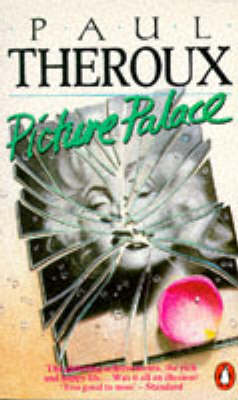
Photographer Maude Coffin Pratt, after over fifty years of levelling her ‘Third Eye’ at people and places, is having a retrospective of her life’s work. Frank Fusco ‘a tetchy, too-skinny bachelor, thirty-odd (…who…) called himself variously a collator or curator or an archivist’ is sorting through the ‘crates of photographs in my windmill’. Maud ‘could not refuse. I do not enter that windmill.’
It’s a seemingly throwaway comment – an elderly woman might not venture into a windmill used for storage for the same reason she might not climb a ladder into her attic. It turns out, though, that the whole windmill-avoidance thing is highly significant.
‘My life was in my pictures’ Maud tells the reader. As Frank decants crate after crate of Maud’s ‘archives’, along with the photographs emerges the story of Maud’s life; her childhood and dysfunctional family relationships. We learn the price Maud’s parents and siblings paid for her philosophy of how good pictures get taken (‘Whip it out when no-one’s looking. (…) Pull down vanity and start blazing away.’), the tragedy she caused by capturing her nearest and dearest’s ‘’souls’’ on film – and the real reason she can’t face going into that windmill.
Picture Palace is a polished piece of writing – it won the 1978 Whitbread Novel Award (precursor to the Costa Awards) – but…
Maud is sooo prickly a character, actually scrub that, she’s more than prickly: she’s rude, mean, cruel, and is like that on purpose, so much so that I really couldn’t warm to the book. When the reveal came I already disliked her so much that it didn’t make much difference either way.
I’ve got a sneaking feeling, though, that Picture Palace might be something of a Marmite novel (you’ll either love it or hate it) and that Hubby might rate it more than me. Next time he’s looking to raid my bookshelf, I might point him in this direction and see what he thinks.
Rating: * Not for me (but worth a try)

