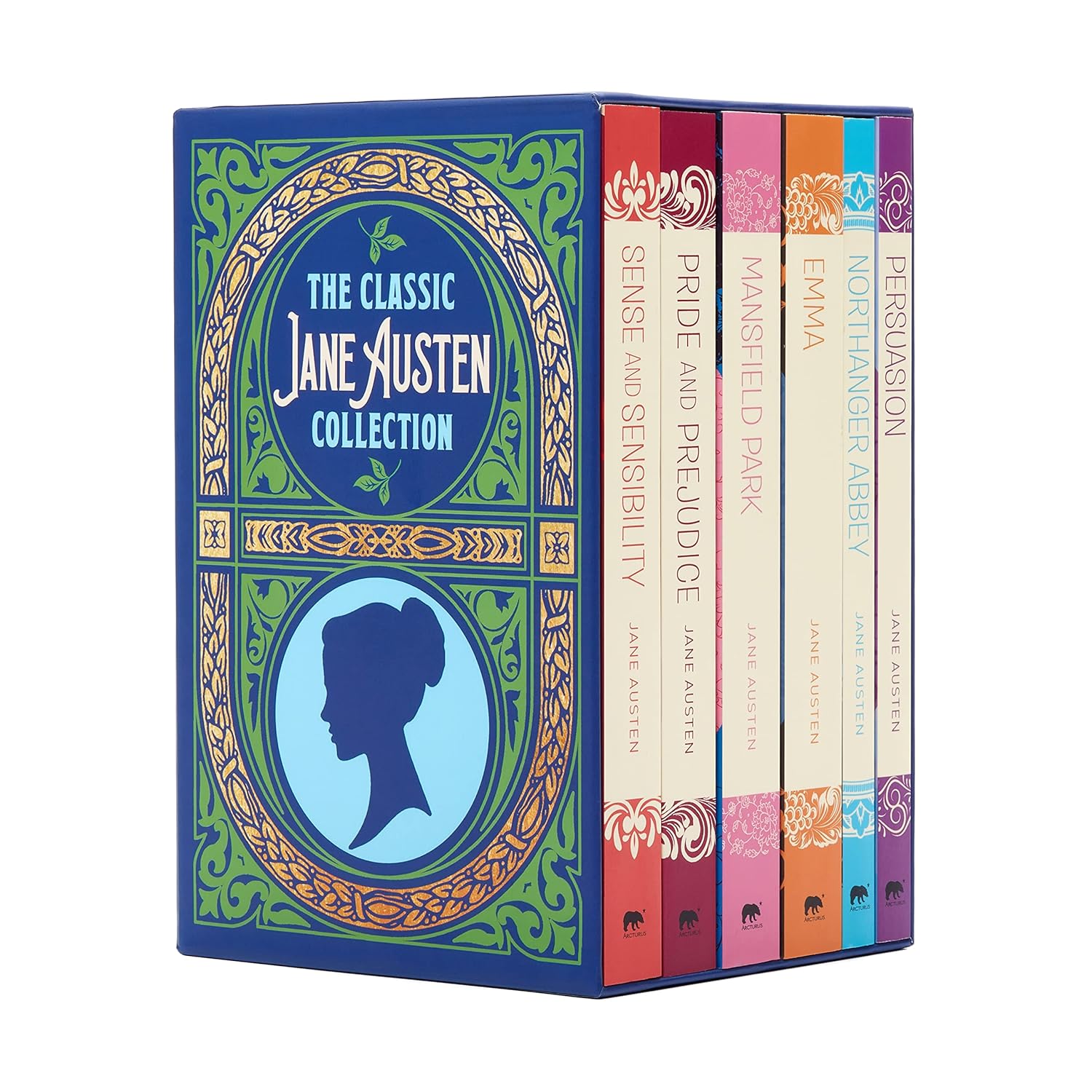
For any ‘Jane-ites’ out there, yes, I know the 250th anniversary of her birth was actually in December 2025. But as so many organisations are continuing to celebrate the milestone into 2026 (including the British Museum, the Jane Austen Centre), I decided I wasn’t too late to jump on the bandwagon.
First, a brief biog. Jane Austen was born on December 16, 1775. Her father was a rector and she was the youngest of seven children. She never married and died in 1817, aged 41. Put like that, it seems such an ordinary life. Yet she wrote six major novels. Four were published in her lifetime, the first when she was 36; the other two were published posthumously the year after her death.
Austen lived through the French Revolution and the Napoleonic Wars. You’d never guess it from her writing. Her subject matter was tea-parties and balls, match-making and courtship, the idiosyncrasies and ambitions of the ‘genteel’ class. She wasn’t unaware of what was happening in the wider world – she had two brothers in the Royal Navy and a cousin’s husband was guillotined – but she wrote about what she knew, arguably the basis of all good writing, with energy, humour, and an eye for the absurdity of everyday life.
So…this month I’ve been rediscovering Austen by rereading her novels. Here’s my one-paragraph-a-book take on the big six (in order of publication). If you’ve never read an Austen novel, grab one and give it a go!
Sense and Sensibility (1811)
A tale of two sisters. This might just as well been titled Secrets and Seduction. The storyline includes a hidden engagement, an extra-marital affair, divorce, elopement, two children born out of wedlock – although, secret engagement aside, the rest is mostly back-story. Elinor and Marianne Dashwood respectively represent sense (learning to govern your emotions) and sensibility (allowing your emotions to govern you). There was a trend at the time for novels of sentiment / sensibility, which allied sensibility with true virtue. Austen intended S&S to demonstrate that, far from being virtuous, excessive sensibility is self-destructive.
Fun Fact: S&S was written in 1795 as an epistolary novel called Elinor and Marianne. JA rewrote it in 1798 as S&S, then revised it again for publication a decade later.
Pride and Prejudice (1813)
The one with THAT oh-so-famous opening line: ‘It is a truth universally acknowledged, that a single man in possession of a good fortune, must be in want of a wife.’ In little more than twenty words Austen introduces the subject matter of the novel while also establishing the mildly ironic tone that permeates the narrative. Class! Elizabeth Bennet was apparently Jane Austen’s favourite among all her heroines and Mr Darcy is certainly my favourite of all her heroes. The supporting cast of characters are also vividly drawn: foolish, garrulous Mrs Bennet; irrepressible, flirtatious Lizzy Bennet, pompous Mr Collins, dashing, duplicitous Wickham. An absorbing read from first page to last.
Fun Fact: P&P began life under the much less catchy title First Impressions. It was refused by the publisher Cadell in 1797 before JA recreated and renamed it twelve years later.
Mansfield Park (1814)
The one with the non-heroine heroine. Leaving aside the fact her name is what you might haggle over with a pimp (Fanny Price) and the concomitant distractions of unintended double entendre (‘Come, mother, you have hardly looked at your own dear Fanny, yet.’), Fanny is sickly, shy, and serious, the antithesis of such spirited Austen heroines as Marianne Dashwood, Elizabeth Bennet and Emma Woodhouse. Yet unlike those three, Fanny never has to reassess her own behaviour, because Fanny is never, ever wrong. Despite the obligatory happy ending, Mansfield Park remains perhaps the most solemn of all Austen’s novels, a kind of elegy to a traditional country-based code of life that is being fast supplanted by a newer, more mercenary city-based one.
Fun fact: When Austen wrote MP, it was her first new full novel for over twelve years.
Emma (1815)
The one about the spoiled brat. ‘Emma Woodhouse, handsome, clever and rich’ fancies herself a match-maker, but reads everyone wrong. The year before Emma was published, Austen wrote in a letter to her niece that ‘three or four families in a Country Village’ are the ‘the very thing to work on’. Of all Austen’s novels, Emma most fully realises her vision in this respect, and it’s often said to be her best. It’s certainly her most playful, chock-full of riddles, wordplay, and numerous ‘misunderstandings’.
Fun fact: The dissolute, extravagant Prince Regent (later King George IV) was an admirer of Austen’s work and Emma was dedicated to him at his request.
Northanger Abbey (1818)
The one that is meta. Catherine Morland ‘was in training for a heroine; she read all such works as heroines must read’. Her current book of choice is ‘Udolpho’ (i.e. The Mysteries of Udolpho by Mrs Radcliff) a novel in the newly popular Gothic Romance genre – think swooning heroines, scary / supernatural events, and remote settings. When Catherine invited to stay at Northanger Abbey, she’s prepared to be scared… Austen wrote NA to take the rise out of gothic romance, and the authorial voice is frequently evident e.g. ‘the advantages of natural folly in a beautiful girl have already been set forth by the capital pen of a sister author.’ NR is a novel about novels – reading them, writing them – and it’s much, much cleverer than I remembered!
Fun fact: NA was written in 1799 as Susan and sold to the publisher Crosby & Sons in 1803, who chose not to publish. Austen bought it back from Crosby in 1816, renamed it Miss Catherine and put it back in a drawer. After her death it was renamed again and published, meaning NA is likely the earliest of Austen’s completed novels as we now have them.
Persuasion (1818)
The one with the old-maid heroine. Anne Elliot is twenty-seven (I know, poor love) and ‘her bloom had vanished’. Eight years earlier, Anne had been engaged to a young naval officer, Captain Wentworth, who was ambitious but had no fortune, and Anne was persuaded by her godmother to break up with him. Roll forward eight years and they meet again. Wentworth has made his fortune and Anne’s ‘bloom and freshness of youth [is] restored by the fine wind which had been blowing on her complexion’ during a visit to Lyme Regis – Tourist Board, take note! You can guess the rest. But we realise there are two kinds of ‘Persuasion’: external (as with Anne and her godmother) and internal (Wentworth’s angry pride that keeps him away long after he is financially secure). A mature, tender novel.
Fun Fact: There is a tradition – poorly substantiated – that Anne Elliot’s life in part reflects a love story in JA’s own life.
So there you have it: the big six in a nutshell! Which one will you choose to read / reread? Hubby, until now a JA virgin, is currently reading Pride and Prejudice, so keep an eye out for a guest review from him soon.

